May 2, 2026
Pressure Washing Insurance: Cost & Coverage You Need (2026)
What pressure washing insurance actually costs: $1M general liability from $50/mo, the surface-damage gap GL won't cover, and what solo operators really need.
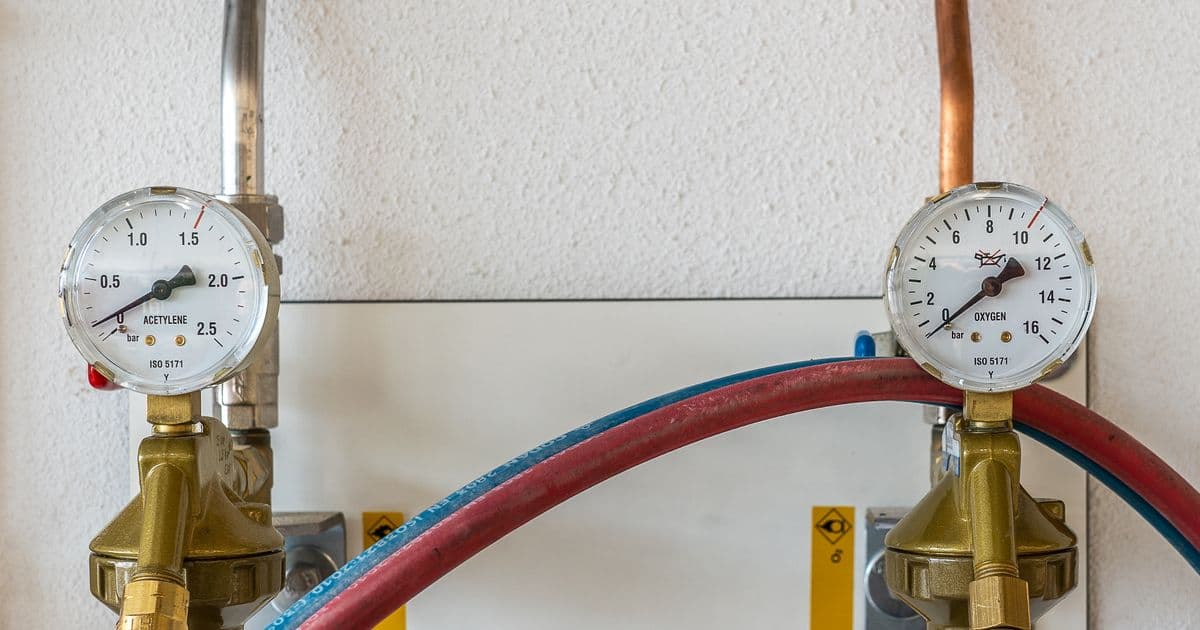
Insurance content for pressure washing operators is dominated by carrier sales funnels — "get a quote in 60 seconds" pages whose actual job is to capture your contact info, not to explain coverage. This article is the alternative. We don't sell insurance and we don't take affiliate commissions from carriers, so we can be direct about what brokers gloss over: chiefly, the "your work" exclusion that makes a default GL policy useless against the most common pressure-washing claim type.
A note on terms: "power washing insurance" and "pressure washing insurance" mean the same thing — same coverages, same carriers, same exclusions. Everything below applies whether you call your business power washing or pressure washing.
Already insured and just trying to set a profitable rate? Try our free pressure washing estimate calculator — it factors insurance into your floor automatically. Otherwise, read on.
Quick answer: insurance a pressure washer actually needs in 2026
| Coverage | Need it? | Typical premium |
|---|---|---|
| General Liability ($1M) | Yes — mandatory | $50–$120/mo solo |
| Care/Custody/Control endorsement | Yes — almost mandatory | $20–$50/mo |
| Commercial auto | If you have a work truck | $80–$200/mo |
| Workers comp | If you have W-2 employees | 2–3% of payroll (NCCI 9014) |
| Surety bond | If your state requires it | $50–$200/yr per $10K bond |
| BOP (Business Owners Policy) | Worth bundling if equipment >$25K | Replaces above as bundle |
| Inland marine (equipment) | Optional, smart >$3K equipment | $15–$30/mo per $5K coverage |
Skip-it list: Cyber liability ($25/mo for a residential pressure washer is overpaying for a non-existent risk). Errors & omissions (E&O is for advice-giving professions; pressure washing isn't one). Umbrella, until you actually have a claim history that pushes you above your GL aggregate.
How much is insurance for a pressure washing business?
Short answer: a properly insured solo operation runs $150–$370/month all-in in 2026. That covers $1M general liability ($50–$120/mo), the care/custody/control endorsement that pays for surface damage ($20–$50/mo), and commercial auto if you run a work truck ($80–$200/mo). Drop the truck and it's closer to $70–$170/month for GL plus the surface-damage endorsement alone.
If you only want the legal minimum to land commercial and HOA contracts, that's $1M general liability — and a pressure washer insurance policy at that level rarely runs more than $120/month for a solo operator. Business insurance for pressure washing gets more expensive the moment you add W-2 employees (workers comp at 2–3% of payroll) or above-ground roof work, but for the typical residential solo or two-person crew, the figures above are what you should expect to pay. The full breakdown by coverage, employee count, and state is below.
Why pressure washing is a moderate-risk insurance category
From an underwriter's perspective, pressure washing is moderate risk for one specific reason: surface damage potential is high, bodily injury risk is low. A pressure washer at 4,000 PSI can pit vinyl siding, etch concrete, strip paint, gouge a wood deck, dent a vehicle hood, blow out window screens, and kill landscaping with chemical overspray — all in a single botched job. Conversely, the bodily-injury claim path (the wand backflow, hose pressure injuries) is real but rare.
Carriers price pressure washing in the "trades" or "cleaning services" tier. You'll pay more than a landscaper, less than a roofer, and roughly the same as a general handyman. The premium math doesn't punish you for being a pressure washer; the coverage gaps punish you if you don't read the policy.
General Liability (GL): the foundation
General liability is the foundation of every pressure washing insurance stack. It covers three things:
- Third-party bodily injury — a customer or bystander gets hurt because of your operation (trips on your hose, slips on a wet surface)
- Third-party property damage — you damage something other than the surface you're cleaning (knock over a grill, break a window with debris, damage a parked car)
- Advertising injury — claims around copyright, trademark, or defamation in your advertising
The de-facto commercial-vendor standard is $1M per occurrence / $2M aggregate. That's the number every commercial customer's COI request will ask for, and most residential HOAs ask for it too.
A note on the limits below $1M: some "starter" insurance products advertise $300K or $500K plans at lower premiums. Don't take them. The premium savings are small ($10–$25/month), and any commercial customer who asks for proof of insurance will reject those limits. You'll end up upgrading mid-policy and paying twice for the difference.
GL protects your business — but only your business. If you're operating as a sole proprietor, your personal assets are still on the hook for claims that exceed the policy limit. Make sure you've handled picking a business structure before you treat GL as full liability protection.
The "your work" exclusion: the gap that matters most
Here's the single most important nuance in pressure washing insurance, and the one carrier sales pages almost universally skip:
General liability does not cover damage to the surface you are cleaning.
Read that twice. Your GL policy excludes "damage to property in your care, custody, or control" or "damage to your work product." This is by design — it forces operators to buy a separate endorsement, which is the carrier's secondary revenue line. But the practical effect is that the most common pressure washing claim — etched concrete, stripped paint, gouged decking — is not covered by your GL alone.
Concrete examples of claims that GL will deny:
- You etch a stamped concrete patio with too-aggressive chemistry → not covered (it's the surface you were cleaning)
- You strip the paint off a customer's siding → not covered
- You gouge a wooden deck with too-narrow a nozzle → not covered
- You pit vinyl siding with a hot-water unit at the wrong distance → not covered (and the technique mistakes that cause this are walked through in pressure washing vinyl siding)
Conversely, claims that GL will cover:
- Your hose trips a customer → covered (bodily injury)
- You break the customer's window with debris kicked up by the surface cleaner → covered (third-party property, not "your work")
- Chemical overspray kills the customer's hydrangeas → covered if hydrangeas weren't part of the work area; gray area if they were directly under the cleaning zone
The fix is a separate endorsement, covered next.
Surface-damage coverage (care, custody & control)
The endorsement that covers what GL excludes goes by several names:
- Care, Custody & Control (C/C/C) — most common name
- Inland marine — specifically the broader form of C/C/C
- Surface damage coverage — what some pressure-washing-specialty carriers call it
- Property of others endorsement — generic version
All of these solve the same problem: they cover the surface you're working on. Typical limits run $25K–$100K, which is enough for almost any single residential claim. Premium runs $20–$50/month on top of your GL.
Buy this endorsement. The math is brutal: a single $4,000 stamped-concrete claim that GL won't pay because of the "your work" exclusion costs you 8 years of C/C/C premium. The number of operators who skip this endorsement and then get hit by a damage claim within 18 months is high enough that some carriers won't write the GL policy without bundling it.
If a carrier tells you they don't write a C/C/C endorsement on their pressure-washing GL — pick a different carrier. They're either inexperienced with the trade or steering you toward a more expensive package.
Other insurance you may need: workers comp & commercial auto
Two more coverages that get triggered by specific business events:
Workers compensation. Required the moment you hire your first W-2 employee in almost every state. Premium is calculated as a percentage of payroll, typically 2–3% for pressure washing operations under NCCI class code 9014 — Mobile Power or Pressure Cleaning Service (no above-ground-level work) & Drivers. If your work expands above ground level, code 9170 applies; for roof-cleaning operations, code 5551. Real-world note: pressure washing is a disfavored class for some carriers, and you may need to shop two or three insurers before one will write the policy. 1099 subcontractors are an exception in most states, but the IRS and state labor departments are aggressive about reclassifying long-term subs as employees, and some states (California, post AB-5) have nearly eliminated the contractor exception.
Commercial auto. If you bought a truck or trailer for the business, you need commercial auto. Personal auto policies routinely deny claims when the accident happened during commercial use — meaning if you wreck on the way to a job, your personal coverage may pay nothing. Premium typically runs $80–$200/month for a single work truck. Add the trailer to the policy as a scheduled item; it's $5–$15 extra and removes a gray area.
If you don't have employees and you use a personal vehicle for occasional jobs, you may be able to add a "business use" endorsement to your personal auto policy — cheaper than full commercial auto. Check the specifics with your carrier; some refuse this option for vehicles used to tow business trailers.
Surety bonds: when your state or city requires one
Bonds are not insurance. A bond protects the customer; insurance protects you. If you fail to deliver work or breach contract, the bond pays out — and then the bonding company comes back to you to recover what they paid. If you damage something and trigger your liability coverage, the insurer pays and that's the end of it.
State requirements vary widely:
- California — every CSLB-licensed contractor (including the C-61/D-63 specialty for pressure washing) is required to post a $25,000 contractor license bond. If you cross the $1,000 job threshold and need the license, you also need the bond.
- Oregon — pressure washing is exempt from CCB licensing and bonding entirely. The exception: if you're doing pressure washing as part of landscaping, you need a Landscape Contractors Board license, which carries a $20,000 LCB bond.
- Florida — no state-level pressure washing bond. City and county requirements layer on top — search your local jurisdiction.
- Most other states — no specific pressure washing bond.
Typical bond cost: 0.5–4% of the bond amount per year for applicants with strong credit (rates rise with weaker credit). A $10K bond runs $50–$400/year; CA's $25K license bond runs $125–$1,000/year. Bonds are obtained through a surety company or an insurance agency that brokers surety; they're a separate quote from your GL.
The right move: search "[your state] contractor bond pressure washing" before assuming you don't need one. The premium is small; the penalty for working unbonded in a state that requires it can be a stop-work order from your state contractor board.
BOP (Business Owner's Policy): when bundling makes sense
A BOP bundles GL + commercial property coverage + business income protection into a single policy. The pitch from carriers is a 10–15% discount versus buying the components separately.
The honest answer on whether to take a BOP:
- Worth it if: you own $25K+ in equipment that you store at a business location, you rent a small commercial space, or you have business income exposure (employees who can't work if your equipment is destroyed)
- Not worth it if: your equipment lives in your truck or your garage, you don't have employees, and your "office" is a phone
Most solo operators don't hit the threshold where a BOP saves money. Standalone GL + C/C/C is usually cheaper for the first year or two.
How your insurance premium shapes your minimum viable rate
Insurance is a fixed monthly overhead. Whatever you pay in premiums has to be amortized across the jobs you do that month. The math:
Monthly insurance ÷ billable hours per month = insurance cost per billable hour
A typical fully-insured solo operator pays:
- GL ($1M): $70/month
- C/C/C endorsement: $35/month
- Commercial auto: $130/month
- Inland marine on equipment: $20/month
- Total: $255/month
At 80 billable hours per month, that's $3.20/hr just to cover insurance. It sounds small until you stack it on the rest of overhead and discover your minimum viable rate is $100+/hr — which means anything you quote that doesn't clear that floor is being subsidized by your savings.
For the full minimum-viable-rate calculation that uses your insurance premium as one of several inputs, see setting your minimum viable rate — or, for the broader rate-setting framework across surface types and pricing models, the 2026 industry rate guide.
Get a real estimate for your driveway
Free calculator. 30 seconds. No signup.
Real-world premium ranges (what operators actually pay)
The numbers from operator forums and current carrier quotes (mid-2026):
| Coverage | Solo | 1–2 employees |
|---|---|---|
| GL ($1M occurrence / $2M aggregate) | $50–$120/mo | $150–$300/mo |
| C/C/C endorsement ($25K–$100K limit) | $20–$50/mo | $30–$70/mo |
| Commercial auto (single truck) | $80–$200/mo | $80–$200/mo |
| Workers comp (% of payroll) | n/a | 2–3% |
| Inland marine (equipment) | $15–$30/mo per $5K coverage | same |
| Bonds (per $10K bond) | $50–$200/yr | $50–$200/yr |
Variables that move you up or down within these ranges:
- State — some states (Florida, Texas) run higher than national average; others (Iowa, Minnesota) lower
- Claim history — even one prior claim moves you 20–40% up
- Equipment size — larger trailer rigs or skid-mount hot water units price higher
- Years in business — first-year operators pay 10–20% more; carriers discount after 2 clean years
Picking a carrier: what to look for (and avoid)
We don't take commission from any carrier and we won't recommend one. But here's what to check when you compare:
Look for:
- Pressure-washing-specific underwriting. Some carriers (Hiscox, Next Insurance, Thimble, Progressive Commercial) have specific products for pressure washing. Generic-business GL policies often have surface-damage exclusions that are even more restrictive than the standard "your work" wording.
- Same-day or next-day COI turnaround. When a commercial customer asks for proof of insurance with their name as additional insured, you need the COI in their inbox within 24 hours or you lose the job. Some carriers take 5–7 business days; that's unworkable.
- Additional-insured endorsement availability. Commercial customers will require this; if your carrier doesn't issue them or charges $50 per endorsement, switch.
- Online dashboard for COIs and policy changes. Calling a broker every time you need a COI is a productivity tax.
Avoid:
- "Starter" tiers below $1M GL — they're below market standard and won't satisfy commercial customers
- Carriers that won't write C/C/C as an endorsement — you'll need it within your first year, and adding it from a different carrier creates coordination problems
- Anyone selling you E&O, cyber liability, or umbrella in your first year — you don't need them yet, and they're high-margin lines for the broker
The carrier list above is not a recommendation; we receive no compensation from any of them, premiums change frequently, and your best fit depends on your state and equipment mix. Get three quotes minimum.
How to actually get covered (the afternoon version)
If you're starting from zero, here's the real process to get a pressure washing business insured — most operators finish it in an afternoon:
- Decide your coverages. For a solo residential operator that's $1M general liability + a care/custody/control endorsement, plus commercial auto if you run a work truck. Use the quick-answer table at the top as your shopping list.
- Get three quotes from pressure-washing-specific carriers. Start with insurers that underwrite the trade directly (Hiscox, Next, Thimble, Progressive Commercial and similar). Generic small-business GL often carries broader surface-damage exclusions — quote it, but read the wording before you compare on price alone.
- Confirm the C/C/C endorsement is included now, not "available later." If a carrier won't write surface-damage coverage onto the GL, move on.
- Ask about COI turnaround and additional-insured endorsements before you bind. You'll need same- or next-day certificates the first time a commercial client asks, and they'll want to be named as additional insured.
- Bind the policy and save the COI as a PDF somewhere you can resend it in seconds. Most lost commercial jobs aren't lost on price — they're lost because the operator couldn't produce proof of insurance fast enough.
Budget roughly $70–$170/month for GL plus surface-damage coverage as a solo operator without a truck, and $150–$370/month all-in once you add commercial auto. Whatever you land on, price your jobs so that premium is already baked into your floor — the free pressure washing estimate calculator factors it in automatically.
FAQ
Do you need insurance for pressure washing? Yes. $1M general liability is the de-facto residential standard and a hard requirement for almost every commercial customer and many residential HOAs. Add a care/custody/control (C/C/C) endorsement and you're covered for the things general liability alone won't pay for — like the surface you're cleaning. Operating without insurance means a single damage incident can end the business.
How much does pressure washing business insurance cost? Solo operators typically pay $50–$120/month for $1M general liability alone, $20–$50/month for the care/custody/control endorsement on top, and $80–$200/month for commercial auto if they have a work truck. Total all-in for a properly insured solo operation: $150–$370/month. With one or two W-2 employees, add 2–3% of payroll for workers comp under NCCI class 9014 (varies by state).
What type of insurance do I need for a pressure washing business? Mandatory: general liability ($1M minimum). Highly recommended: care/custody/control endorsement (covers the surface you're cleaning, which GL alone excludes). Required if you have a work truck: commercial auto. Required if you have W-2 employees: workers compensation. State-dependent: surety bond. BOP (Business Owners Policy) is worth considering once you have $25K+ in equipment.
Is pressure washing considered high risk for insurance? Moderate. Less risky than roofing or tree-removal work, more risky than landscaping or general handyman work. Most carriers price pressure washing in their "trades" or "cleaning services" tier. The risk is concentrated in surface damage (pitted vinyl, etched concrete, stripped paint) rather than bodily injury, which is why general liability premiums are reasonable but the C/C/C endorsement matters.
Do I need a bond for pressure washing? State-dependent. California requires a $25,000 contractor license bond for any CSLB-licensed contractor (which you need above the $1,000 job threshold). Oregon explicitly exempts pressure washing from CCB licensing and bonding — but landscape contractors who pressure wash as part of landscaping need a $20,000 LCB bond. Florida has no state-level pressure washing bond, only city/county requirements. Most other states have no specific bond. Annual premiums are 0.5–4% of the bond amount for applicants with good credit. A bond protects the customer if you fail to perform; insurance protects you if something goes wrong. They are not interchangeable.
What does general liability insurance cover for pressure washing? GL covers third-party bodily injury (a customer trips on your hose), third-party property damage (you knock over their grill), and advertising injury (a competitor sues over a marketing claim). What it does not cover is the most important nuance: the surface you're actively working on — your "work product" — is excluded by default. That gap is filled by a C/C/C endorsement.
Does pressure washing insurance cover surface damage? General liability alone does NOT cover damage to the surface you're cleaning — that's the "your work" exclusion that catches every new operator off guard. To cover surface damage (etched concrete, stripped wood deck, pitted vinyl, paint failure from chemical overspray), you need a separate care/custody/control endorsement (sometimes called inland marine or surface damage coverage). Typical limit: $25K–$100K. Typical cost: $20–$50/month on top of GL.
Get a real estimate in 30 seconds
Free pressure washing cost calculator. 7 surface types, regional pricing band, no signup.
Open the calculatorRelated guides
How to Price a Driveway Pressure Washing Job
An operator-side guide to pricing residential driveway pressure washing jobs in 2026: rate ranges by surface, the minimum viable rate floor, a worked 600-sqft example, upsells, and when to walk away.
How to Start a Pressure Washing Business in 2026
An honest, full-first-year playbook for starting a pressure washing business in 2026: equipment budgets, licensing, first 10 customers, surviving year one, and a realistic P&L.
Pressure Washing Prices 2026: Rates Per Square Foot & Hour
2026 pressure washing rates: $0.08–$0.40/sq ft for concrete, $0.20–$0.35 for siding, $60–$100/hr — plus the minimum-rate math to price every job profitably.
Pressure Washing Vinyl Siding: Complete Operator Guide
An operator-grade technique guide for cleaning vinyl siding without damage: soft wash chemistry, downstream injector setup, mix ratios, nozzle selection, and pricing your first siding job.